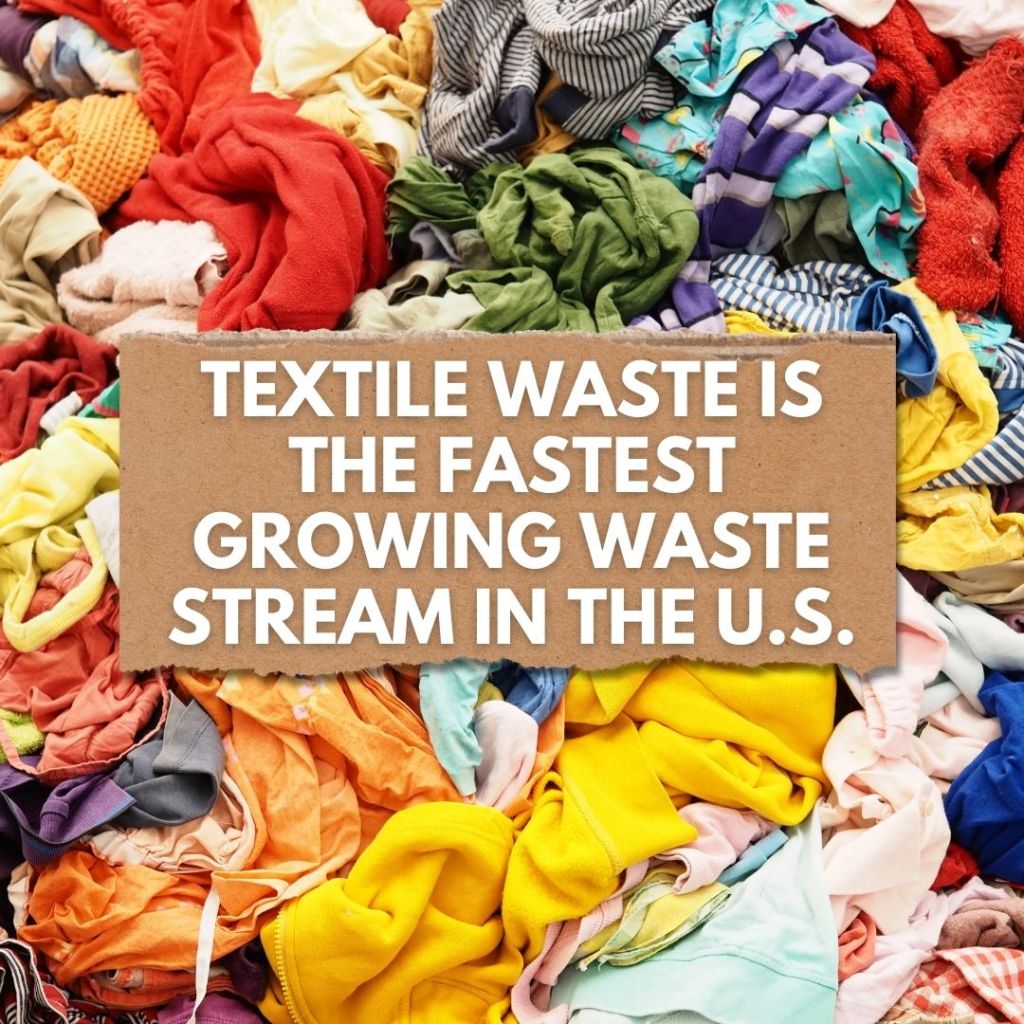
Textile waste is a big deal.
From the moment we’re born until we pass away, textiles are a constant in our lives.
Yet, the fashion industry, one of the least regulated sectors, is notorious for environmental harm and poor labor practices.
Textile waste comes from various sources:
- manufacturing scraps
- unsold items
- discarded clothes
The industry uses toxic dyes and chemicals that pollute our water and soil. Plus, nearly two-thirds of all fibers today are made from fossil fuels, like polyester. The production and transportation of textiles also generate massive pollution exacerbating our climate crisis. The fashion industry alone is responsible for 10% of global carbon emissions.
A major issue is that a lot of barely worn clothing ends up in landfills. Even with a ban on disposing textiles in the trash in Massachusetts since November 2022, the problem persists. Decomposing textiles release methane and nitrogen oxide, potent greenhouse gases, and leach dyes and chemicals into the environment.
Making new textiles to replace the discarded ones just keeps the cycle of waste going.
Sustainability isn’t just about the materials we use or our individual practices: it’s about fostering a culture of resourcefulness and respect for our planet. We need to embrace eco-friendly materials and engage with policymakers to promote a circular economy for textiles. By adopting sustainable practices and advocating for change, we can reduce our environmental impact and work towards a fairer, more sustainable future.
A version of this post first appeared in the LexZeroWaste October Newsletter
 Mary Ann Stewart
One response to “Rethinking Textile Waste: A Path to Zero Waste”
This weste making A toy ,tady ,doll ,
LikeLiked by 1 person